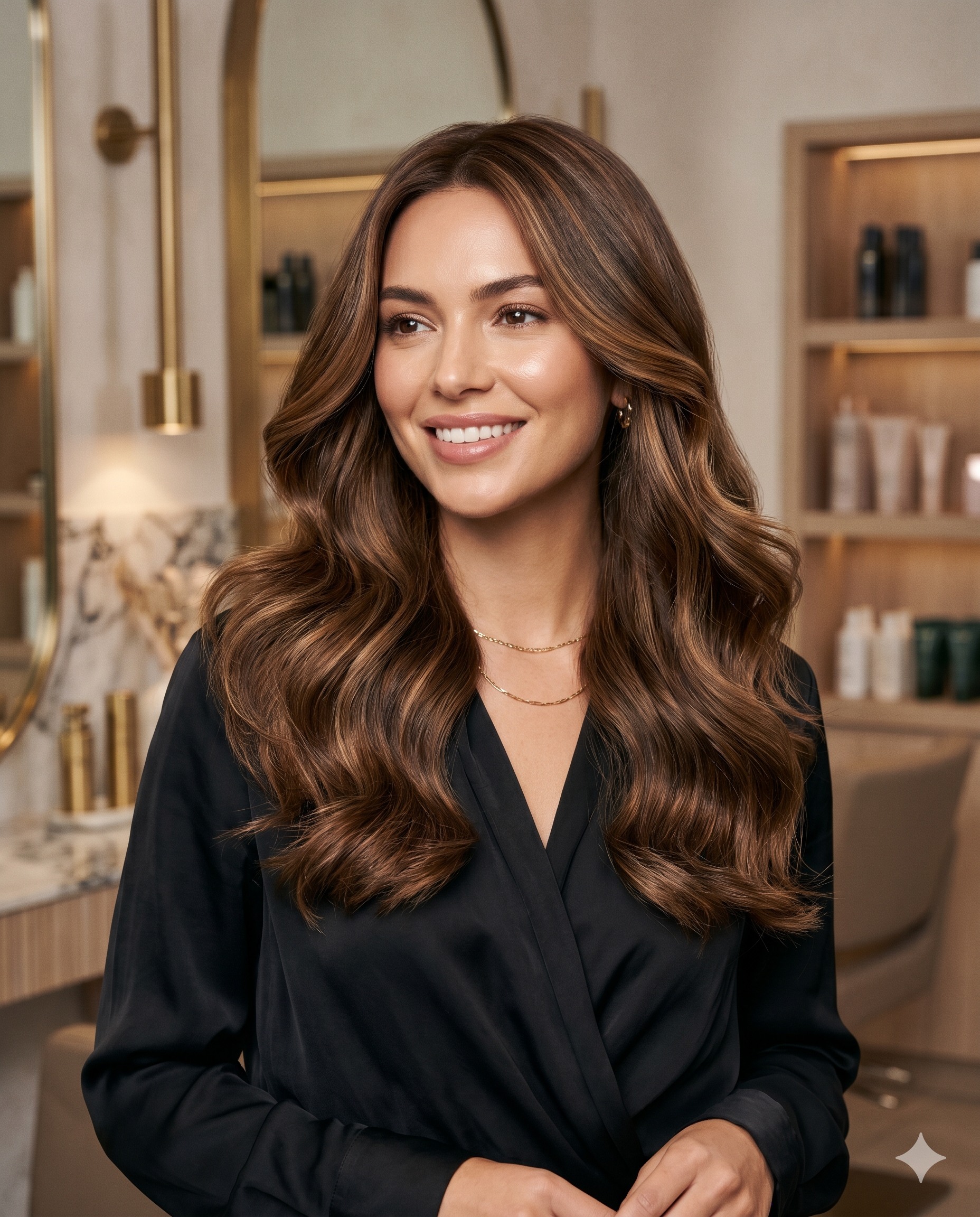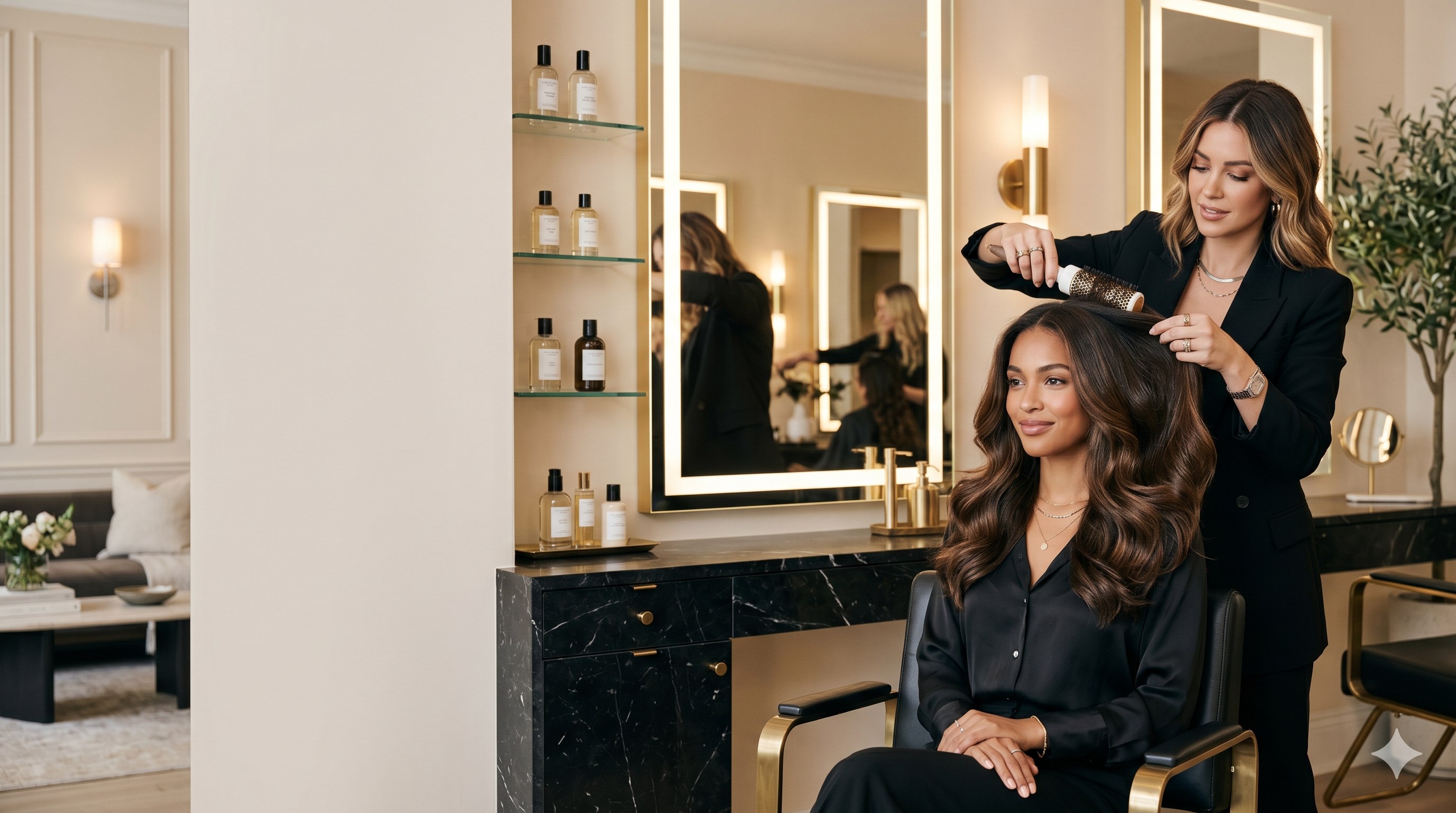
Grey coverage and highlights solve different goals. Coverage aims for a more uniform result, while highlights or lowlights can blend contrast and make silver part of a dimensional colour plan.
Neither direction belongs to one age or gender. Choose by how much grey you want visible, the regrowth pattern you can maintain, your existing colour and the overall style you want.
Coverage and blending solve different goals
Start by deciding whether you want greys concealed, softened or intentionally featured. Saying only that you want grey colour can lead to very different interpretations.
Look at the hairline, temples, parting and overall percentage. These areas may need different placement to create one coherent finish.
Coverage and highlights compared
This comparison describes common planning differences; the exact colour system and placement should be confirmed during consultation.
| Decision point | Full coverage | Highlights or grey blending |
|---|---|---|
| Primary goal | More uniform concealment | Reduce contrast or integrate silver |
| Visible result | Consistent target shade | Dimensional mix of lighter and darker strands |
| Regrowth | A clearer root line may appear | Transition can appear softer depending on placement |
| Appointment focus | Root match, lengths and coverage performance | Placement, tone, natural grey pattern and contrast |
| Maintenance | Root and tone refresh plan | Toner and placement refresh plan |
Full coverage
Full coverage may suit clients who want a consistent shade and minimal visible silver. The colourist should assess resistant areas, natural depth and previously coloured lengths.
A uniform finish can create a more visible line as new grey growth appears. Ask how often you are likely to notice the contrast rather than accepting a universal schedule.
Highlights and grey blending
Highlights, lowlights or a combination can connect grey strands with the surrounding colour. The aim may be softer contrast rather than complete concealment.
Placement around the face and parting is important. Toning can refine warmth or brightness, but the plan should allow for how tone changes between visits.
Options for men
Short hair can show regrowth and tonal changes quickly because the shape is refreshed frequently. Some men prefer subtle blending at the temples; others choose full natural-looking coverage or keep silver visible.
Coordinate colour with fade height, beard tone and haircut frequency so the maintenance plan is realistic.
Options for women
Longer hair offers more placement choices, including face framing, dimensional highlights, lowlights and gradual transitions toward natural silver.
Previous dark global colour can affect how easily a lighter blending plan is achieved. A staged transition may protect condition and create a more believable grow-out.
Maintenance and visible regrowth
Maintenance depends on contrast, grey percentage, growth speed, placement and personal tolerance. A client who dislikes any visible root will have a different plan from someone comfortable with a soft transition.
Ask what the colour will look like after several weeks and which refresh appointments address roots, tone or placement.
Reference and consultation checklist
Bring references that show the amount of grey you want to keep, not only the shade you like.
- Show hairline and parting in natural light
- Identify areas you want covered or featured
- Share all permanent colour, henna and highlight history
- Discuss haircut and beard maintenance
- Agree on acceptable regrowth contrast
Reaction-history guidance
Tell the salon about previous itching, swelling, rash or other reactions and follow the colour product's required sensitivity process. Do not colour an irritated or damaged scalp.
A strand assessment helps with colour behaviour and condition; it is not the same as a reaction-risk procedure. Seek appropriate medical advice for a significant previous reaction.