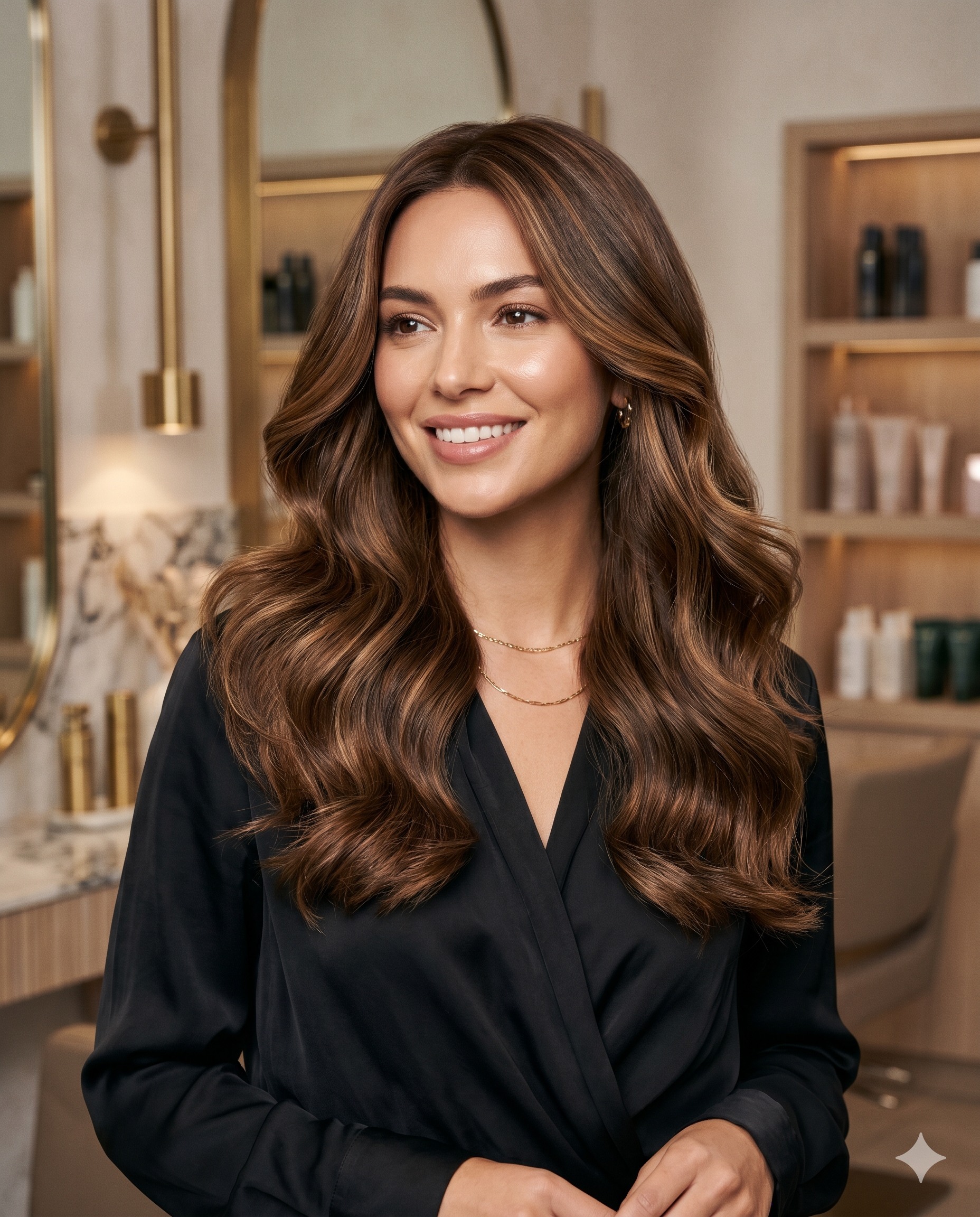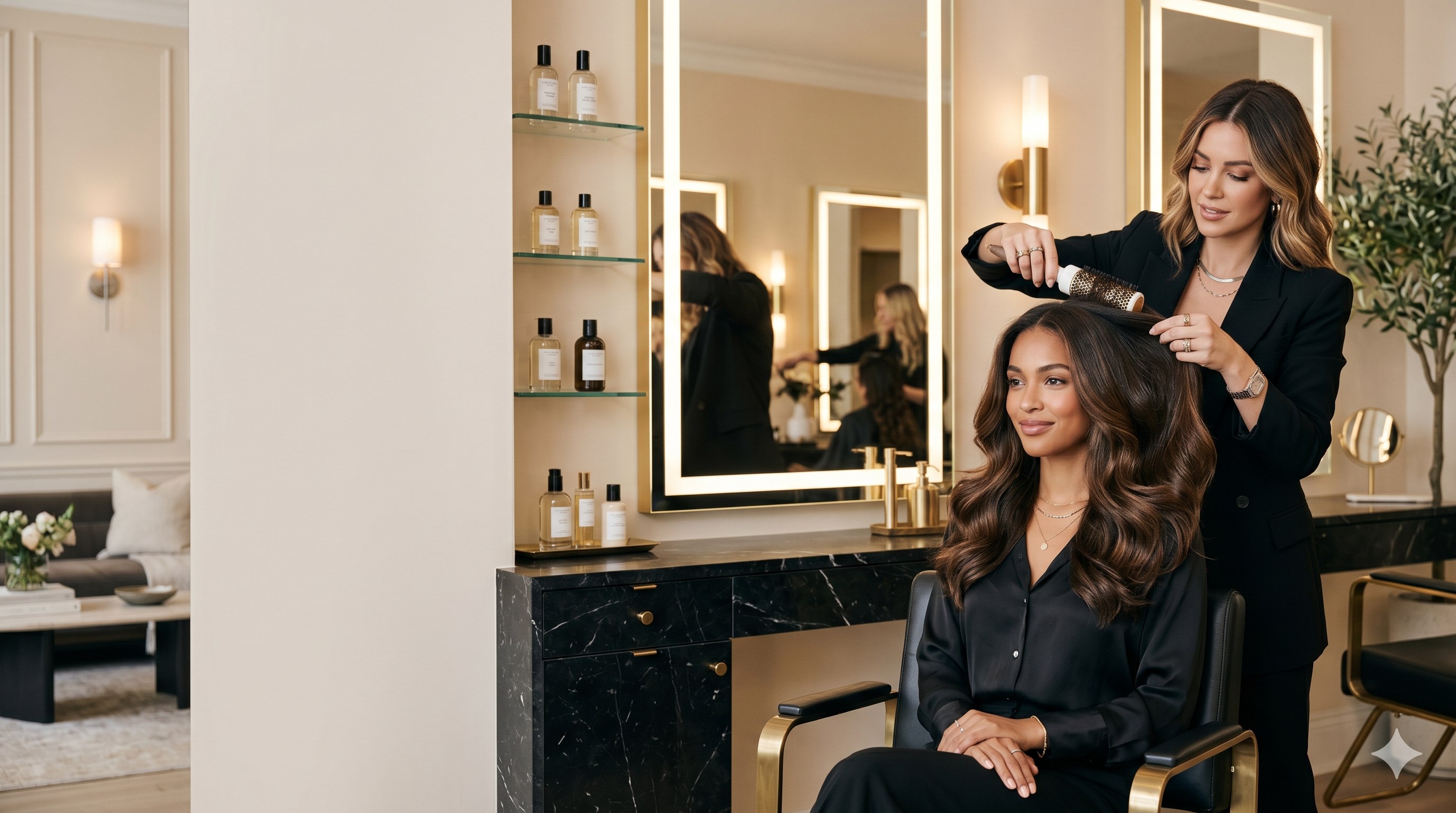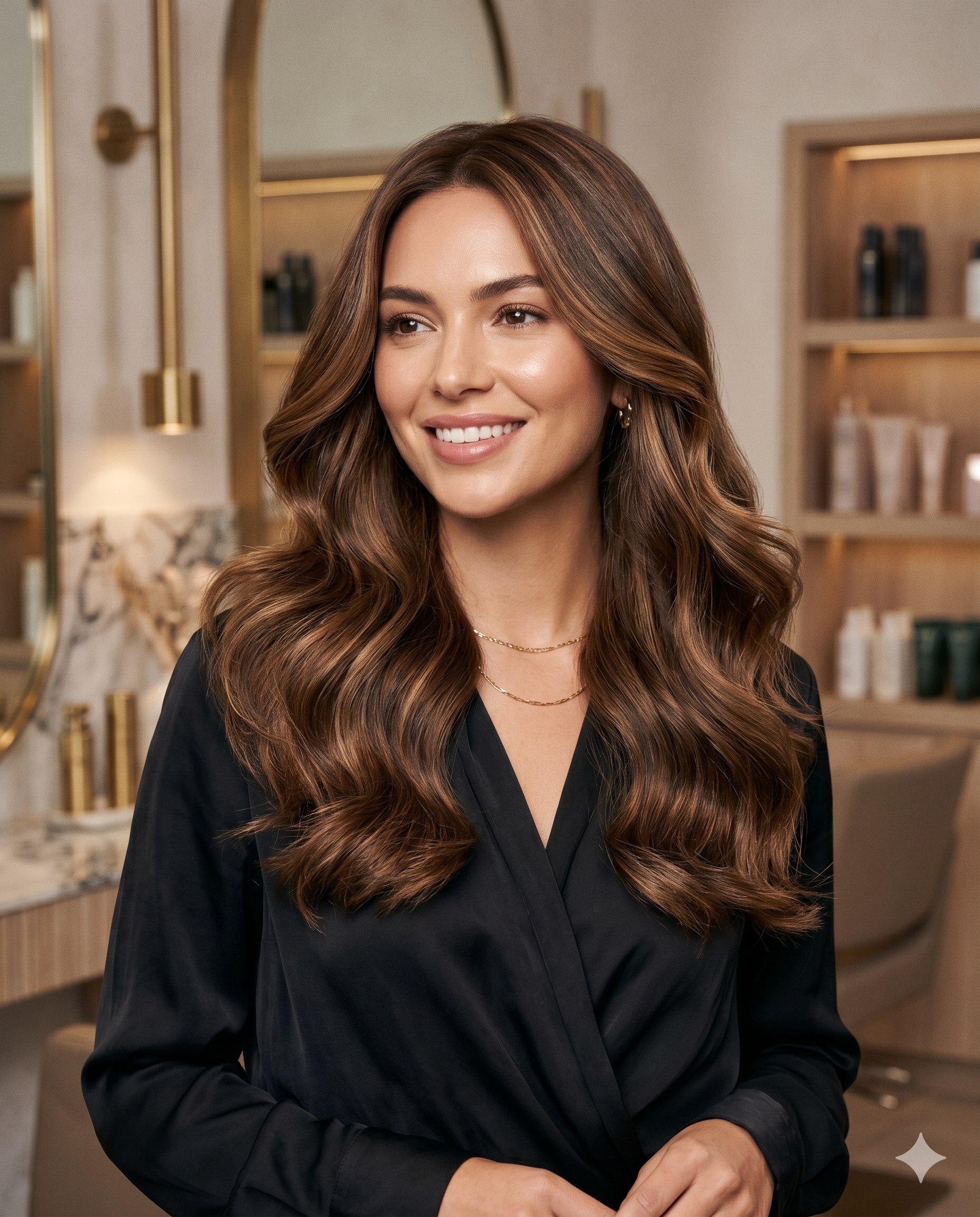
Global colour, highlights and balayage change hair in different ways. Global colour creates an all-over direction, highlights build repeated lighter sections and balayage uses hand-painted placement for tailored dimension.
The right choice depends on the visual change you want, your natural base, previous colour, maintenance preference and hair condition. For dark Indian hair, the number of lightening stages needed is also an important part of the consultation.
Quick comparison
Use this as a starting point. Placement and technique can be customised after the stylist sees your base and references.
| Factor | Global colour | Highlights | Balayage |
|---|---|---|---|
| Placement | All-over colour direction | Selected sections from roots or chosen zones | Hand-painted, customised sections |
| Visual effect | Unified tone | Repeated brightness and contrast | Soft or bold dimensional ribbons |
| Grow-out | Root contrast can be visible | Depends on placement and root blend | Often designed for a softer transition |
| Complexity | Varies by base and target | Sectioning, lightening and toning | Design, painting, lightening and toning |
| Maintenance | Root and tone refreshes | Tone and placement refreshes | Toner and customised refresh plan |
Global colour
Global colour is useful when you want a more uniform all-over shade, tonal change or grey-coverage direction. The final result depends on the starting base and whether the goal is darker, similar in level or significantly lighter.
Ask how new growth will look and when tone or roots may need attention. Previously coloured lengths may respond differently from natural roots.
Highlights
Highlights create dimension through selected strands or sections. Fine placement can look blended; bolder sections can create stronger contrast around the face or throughout the hair.
The stylist should plan section size, spacing, brightness and toner together. A photograph may show the styling as much as the colour, so ask how it will appear when worn naturally.
Balayage
Balayage describes a hand-painted placement approach, not one fixed colour. It can be subtle or high contrast and should be designed around haircut, movement, natural base and maintenance preference.
A soft root transition can make grow-out feel more gradual, but toner and care still matter. Low-maintenance does not mean no maintenance.
Choosing for dark Indian hair
Very dark bases may reveal warm underlying tones as they lighten. Reaching cool or very pale references can require more than one carefully planned stage, and a stylist may recommend a warmer target to protect condition.
Bring references in daylight and discuss what you like: brightness, placement, contrast or tone. This gives the colourist more useful information than asking for a trend name alone.
Colour consultation checklist
A good plan connects the target shade to your history, daily styling and willingness to maintain tone.
- Share all previous colour, henna and lightening
- Discuss grey coverage separately from fashion colour
- Agree on placement and contrast
- Ask how many stages may be needed
- Plan toner, root and home-care reviews
Responsible scalp and allergy guidance
Follow product instructions and the salon's required sensitivity or patch-testing process. Tell the stylist about past reactions and do not colour an irritated, scratched or inflamed scalp.
The American Academy of Dermatology also advises following package directions and taking precautions with colouring and perming. Seek medical help for a significant reaction rather than attempting to cover it with another cosmetic service.