There is no single best hair colour for every Indian skin tone. Undertone can help organise ideas, but eye colour, natural base, contrast, wardrobe, greys and personal taste all matter.
A useful consultation turns words such as caramel, ash or burgundy into a level, tone and placement that can be achieved responsibly on your current hair.
Undertone is a guide, not a rule
Warm, cool and neutral labels can help compare references, but they should not restrict you. The same shade changes with depth, placement, lighting and the colour surrounding the face.
Test ideas near the face and decide whether you want harmony or deliberate contrast. Your preference is more important than a rigid chart.
Warm colour directions
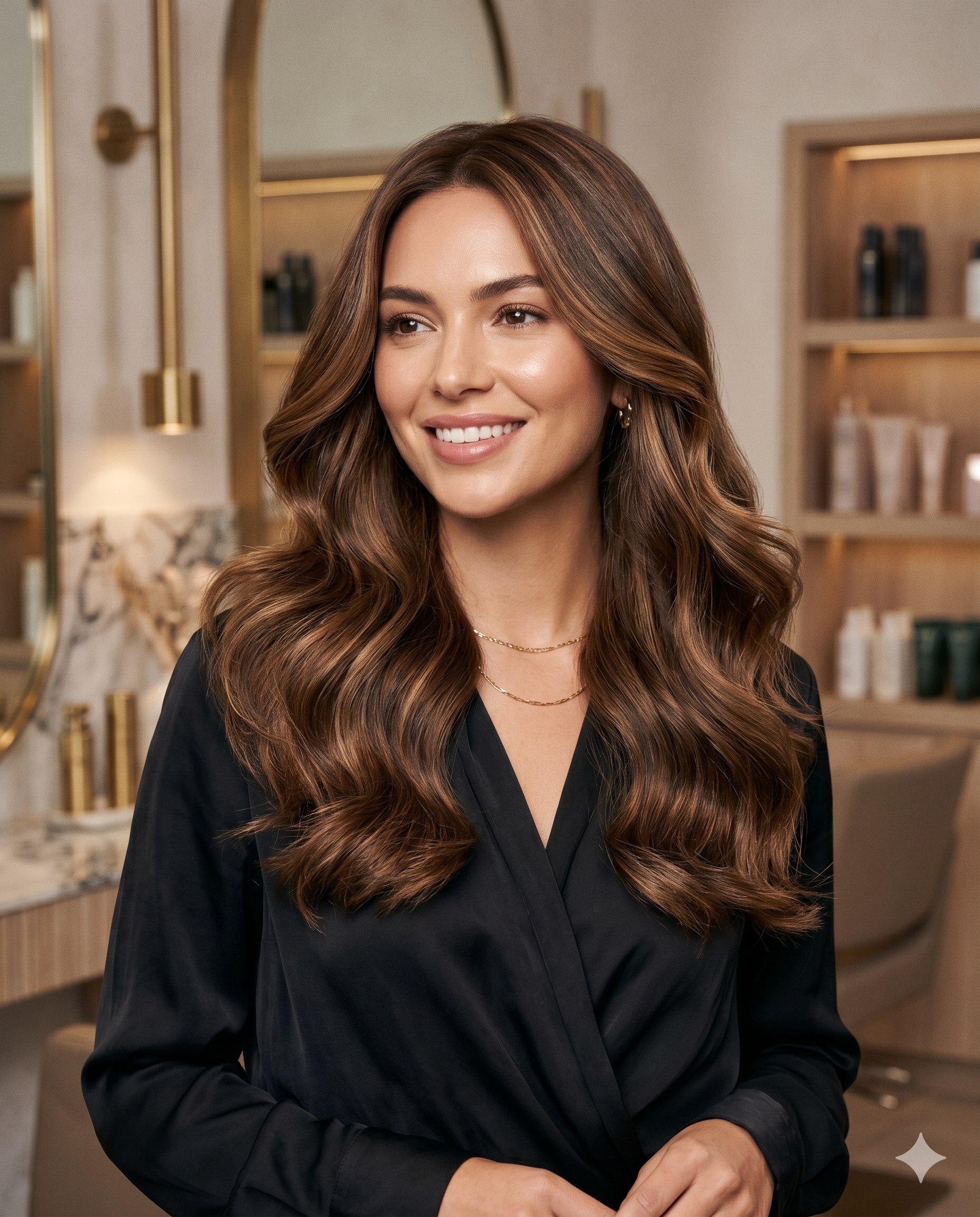
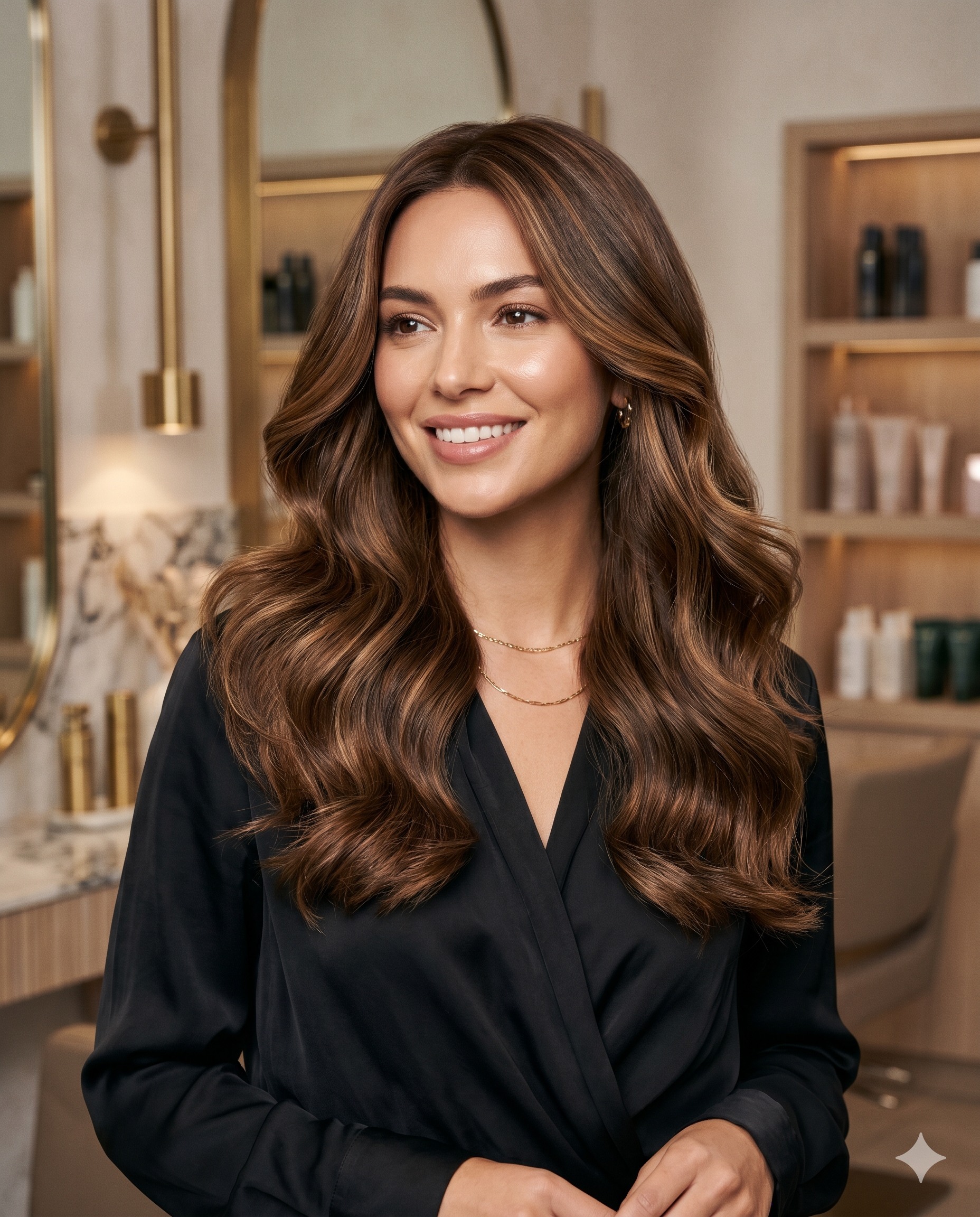
Chocolate, chestnut, caramel, honey, copper and warm burgundy directions can add visible richness to dark bases. The exact warmth should be selected with your natural depth and desired brightness in mind.
Warm tones can also appear naturally during lightening, so the colourist may refine rather than erase every trace of warmth.
Cool colour directions
Ash brown, cooler mocha and muted burgundy references may suit clients who prefer less golden warmth. On a dark base, a very cool and pale reference can require significant lightening and ongoing toning.
Ask what is achievable in the current visit and how the tone may change between refreshes.
Neutral colour directions
Neutral browns and beige-leaning dimensions can balance visible warmth and coolness. They are useful when you want a polished change without a strongly golden or ashy identity.
Neutral does not mean maintenance-free; gloss or toner may still be part of the plan.
Choosing brightness on dark hair
The greater the distance between your natural base and the reference, the more the colourist must consider lightening stages and condition. Previous dark colour or henna can make the path less predictable.
Face-framing brightness, partial placement or a warmer level can create impact without pursuing the palest possible result in one visit.
Grey-blending considerations
Decide whether you want full coverage, softer blending or deliberate silver contrast. Each has a different regrowth pattern and appointment rhythm.
Grey percentage, natural base and placement around the hairline affect the plan more than age or gender.
Reference-photo checklist
Bring two or three images and identify what you like in each.
- Similar natural base where possible
- Placement visible in daylight
- Both straight and textured styling references
- A result you would like after several weeks
- Examples of contrast you do not want
Strand-test and reaction history
Share colour, bleach, henna and reaction history. A strand assessment can help evaluate lift and condition, while the product's required sensitivity procedure addresses reaction risk.
Do not colour an irritated or injured scalp. Seek appropriate advice for previous significant reactions before another cosmetic colour service.