The sweeping front and rounded layers in a butterfly haircut photo can make long hair look full of movement. Before asking for the same cut, separate the shape from the blow-dry. The haircut creates the lengths and layering; styling helps arrange them into the finish shown in the reference.
At a haircut consultation in Nellore, describe how you normally wear your hair and how much time you spend on it. That gives the stylist a practical starting point for adapting the butterfly idea to your texture, density and preferred length.
Quick answer: agree on the shortest layer first
A butterfly haircut usually refers to a layered shape with shorter pieces around the face and longer layers behind them. The exact design varies. Point to where you want the shortest front piece to sit, then agree on how much length and fullness should remain at the bottom.
If you need every section to fit into a ponytail or prefer to air-dry, say so before cutting. Keeping the overall length does not automatically mean every new layer will tie back or fall like a styled reference.
Read the shape in our salon's butterfly haircut example
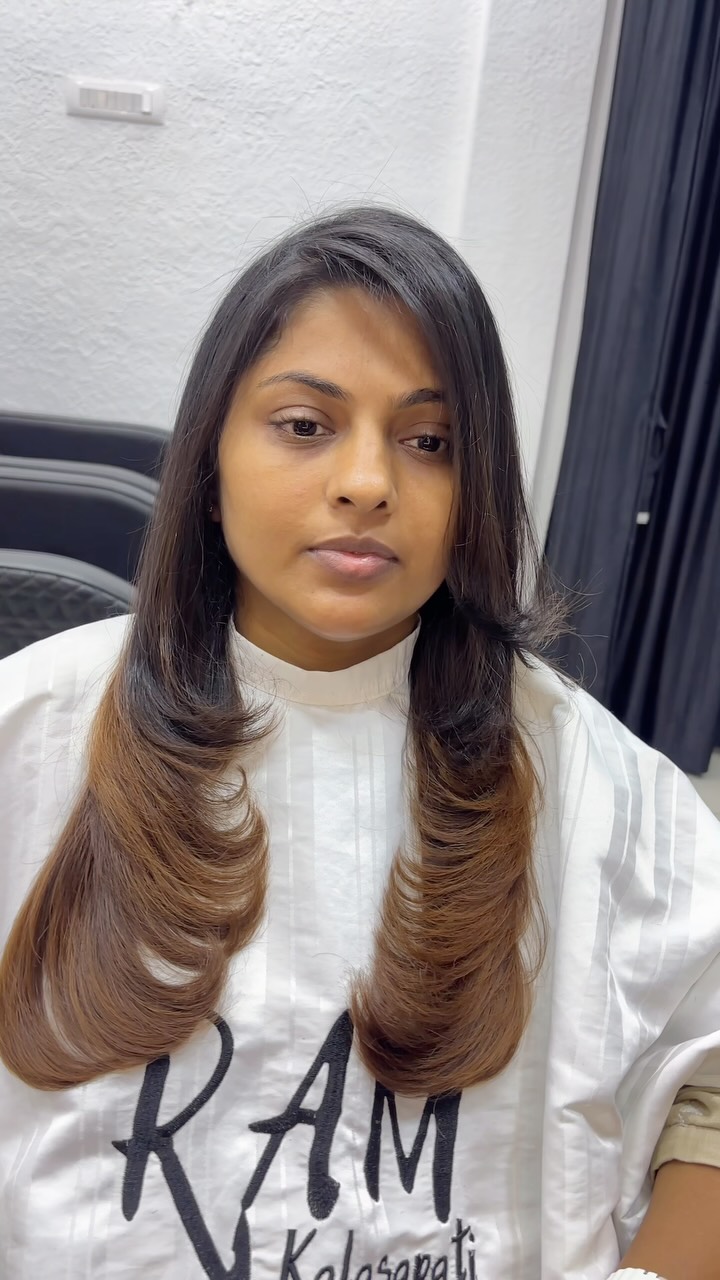
The photograph above comes from RAM KALASAPATI's feathered butterfly haircut post on Instagram. It shows face-framing sections, longer hair below them and curved, styled ends. The useful reference details are the placement of the front layers and how the shorter and longer sections connect.
This is a finished salon look. It does not show the hair air-dried or establish how much styling the client uses at home. Ask for a finish demonstration that matches the tools and time you actually have.
Adapt the layering to your texture and density
Bring a photo of your hair on an ordinary day, before a special blow-dry. It helps explain where it lies flat, expands, waves or turns at the ends. A reference with a different texture can still be useful, but it should begin a conversation about adaptation.
| Your hair or routine | What to discuss | Detail to agree before cutting |
|---|---|---|
| Fine or lower-density lengths | How much layering preserves a full-looking outline | The weight to retain through the ends |
| Dense hair | Where you want movement or less bulk | How the layers will connect without removing too much weight |
| Wavy or curly texture | How the shape changes as it dries | The visible front length in your natural texture |
| Mostly air-dried hair | A softer interpretation of the reference | Which parts of the pictured finish depend on styling |
| Daily ponytail or clip | The length needed to keep the front secure | Whether any face-framing pieces may fall loose |
Show what keeping the length means to you
Use your hand to mark the shortest acceptable overall length and the shortest acceptable front section. These are separate decisions. You might want the back left long while allowing more change around the face, or you may prefer longer framing throughout.
Also discuss your usual parting. A centre-parted reference can look different when worn to one side. If you are undecided about a fringe, ask to compare longer face framing with the upkeep of a shorter fringe before committing to either.
Learn the everyday version of the finish
At the end of the appointment, ask the stylist to show how to direct the front and arrange the layers using your normal routine. Be clear if you do not use a round brush or dryer. It is better to plan a finish you can repeat than to choose a cut solely from one polished photograph.
The American Academy of Dermatology recommends gentle handling and low or medium heat when using styling tools. Follow guidance suited to your hair and tools; repeatedly increasing the heat is not a substitute for learning the styling technique.
For the next trim, agree on what to watch for: front pieces becoming awkward, ends losing their outline or the layers feeling disconnected. There is no single return interval that fits every growth rate and preferred shape.
Your butterfly haircut consultation checklist
Send a current photo and the haircut reference when contacting RAM KALASAPATI on D-Mart Road, Magunta Layout, Nellore. Say which feature you want: movement around the face, a layered outline or a rounded styled finish.
Ask the stylist to confirm the length plan before cutting and the appointment scope before quoting. If you also want highlights, discuss how the colour placement should work with the new layers.
- Your shortest acceptable front and overall lengths
- Whether the front must tuck behind your ears or tie back
- Your natural texture and usual parting
- The tools and time you use on a normal morning
- How much change you want now versus at a later appointment